
Solar-ready, EECA-approved, smart and Dynamic Load Balancing enabled.
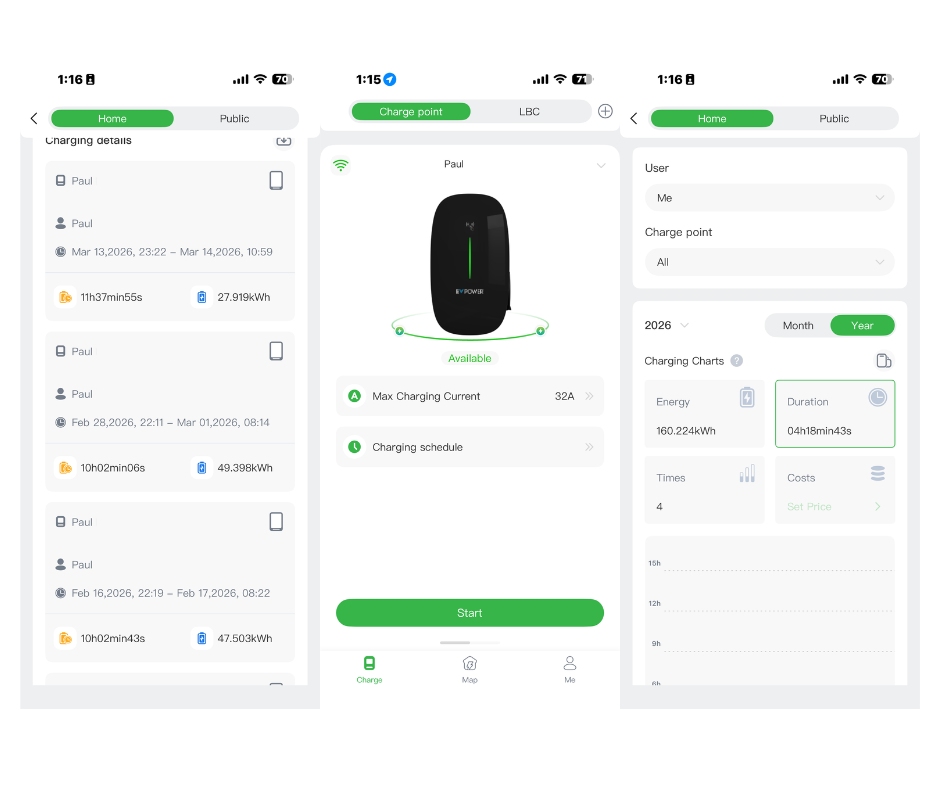
The ECO Charge 7kW Wall Charger with OCPP, delivers reliable everyday charging while protecting your property’s electrical supply. Control via the app, RFID swipe card, or simple plug-and-charge operation. Ideal for homes, holiday properties, shared driveways, and light commercial installations.
Pricing from $799 (Does not include install)
You can charge from a standard three-pin socket, but it is slow and not designed for continuous high-load charging. A dedicated home charger is faster, safer, and more efficient. Most EV owners install one to ensure reliable overnight charging and to avoid putting strain on household wiring.
A standard wall plug usually charges at 1.8–2.4 kW, giving roughly 8–12 km of range per hour. A typical home charger delivers 7.2 kW (single phase) or up to 22 kW (three phase), depending on your home supply. That can equate to 30–120 km of range per hour—often 4–10 times faster.
Costs vary depending on:
• the distance from your switchboard
• whether cabling needs to run through walls or underground
• whether your home requires electrical upgrades
For a detailed quote, please talk to our sales team.
Not always. Many homes can support a charger as-is. However, older switchboards may need new breakers or load management devices to prevent overload. Your installer will perform a site assessment to confirm whether upgrades are required.
Yes. Many smart chargers allow you to schedule charging for off-peak hours or prioritise solar generation. This can materially reduce charging costs. Some models integrate directly with home solar systems for automated solar-only charging.
Yes. Home chargers are built to strict safety standards and include temperature monitoring, overcurrent protection, and automatic shut-off. A certified installer ensures the wiring and switchboard are compliant and safe for continuous use.
Yes. As EV uptake increases, off-street EV charging is becoming a desirable home feature. A modern, professionally installed charger can enhance resale appeal and future-proof your property. You can also remove your charger and bring it with you if you move to a new property.
You must use a licensed electrician. EV chargers require specialised wiring and must meet NZ electrical safety regulations. DIY installation can void the charger warranty and your home insurance.
Yes. Most home chargers are rated for outdoor use and are designed to withstand rain and sun. Installers will ensure the unit is positioned safely, ideally with some shelter for long-term durability.